
You’ve seen the Instagram photos of Chefchaouen’s blue walls and Marrakech’s riads. You’ve also seen the Reddit threads warning you not to go alone. The truth sits somewhere specific, not in the middle. I spent 23 days traveling alone through Morocco in early 2026 — Tangier, Chefchaouen, Fes, Marrakech, Essaouira, and a desert stop in Merzouga. Here’s what actually happened.
The Harassment Situation: What Solo Women Actually Face
Morocco has a harassment problem. Anyone who tells you otherwise is selling you something or hasn’t been there. The scale matters more than the fact. In 2026, the situation in tourist zones remains persistent but rarely physical. Expect comments, stares, hisses, and men following you for a block or two. Expect it daily in Marrakech’s medina. Expect almost none of it in Essaouira’s beachfront or Chefchaouen’s upper streets.
The difference between cities is stark enough that it should shape your itinerary. A solo woman in Marrakech’s Djemaa el-Fna at night will attract attention within minutes. A solo woman walking the same hour along Essaouira’s ramparts might not be bothered at all. This isn’t about Morocco being “safe” or “unsafe” as a whole. It’s about knowing which neighborhoods and cities have higher friction.
What the harassment actually looks like
Most of it is verbal. “Bonjour, jolie.” “Hello, beautiful, where you from?” Some men will walk next to you and talk at you for 30 seconds before giving up. A smaller number will follow longer. In 23 days, I had two incidents that crossed into what I’d call threatening: one man in Fes grabbed my elbow to pull me toward his shop, and one man outside my Marrakech riad positioned himself in my path and refused to move until I turned around and walked the other way. Neither escalated. Both ruined my afternoon.
What you won’t find much of in Morocco is the kind of opportunistic theft or violent street crime that makes cities like Rio or Johannesburg genuinely dangerous. Pickpocketing exists in crowded souks, but it’s less common than in Barcelona or Paris. The risk in Morocco for solo women is almost entirely social pressure and boundary-pushing, not physical attack.
City-by-City Safety Comparison
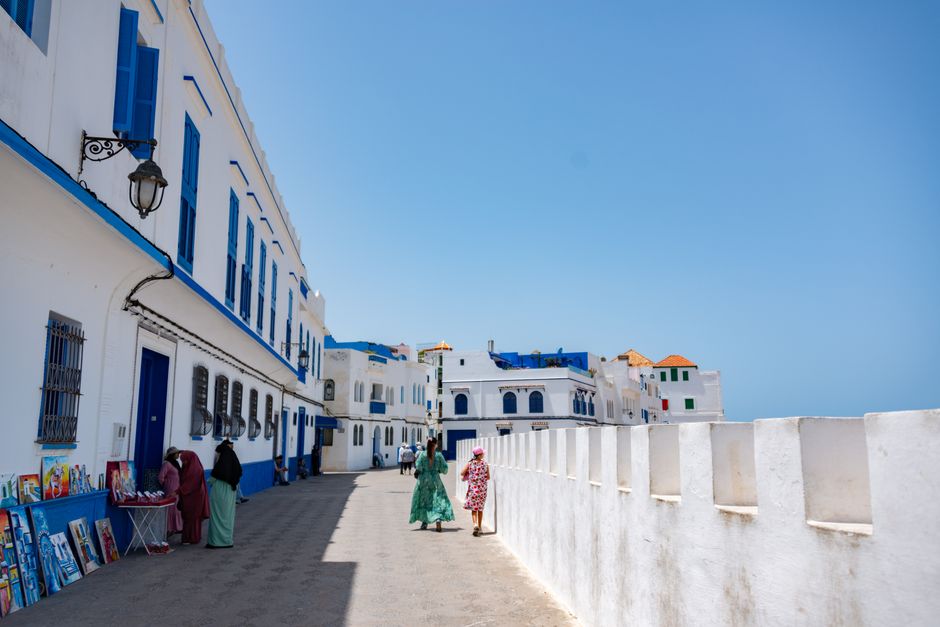
This is the table I wish I’d had before going. It’s based on my experience plus conversations with 14 other solo female travelers I met in hostels and riads along the way. The harassment score is 1-10, with 10 being constant and unavoidable. The overall comfort score combines harassment, ease of navigation, and how safe I felt walking alone after dark.
| City | Harassment Level (1-10) | Walking Alone at Night | Overall Comfort | Notes |
|---|---|---|---|---|
| Marrakech | 8 | Avoid medina after 10pm | 4/10 | Worst for persistent following and scams |
| Fes | 7 | Avoid medina after dark | 5/10 | More aggressive touts, fewer tourists to blend into |
| Tangier | 5 | Okay in main areas | 6/10 | More cosmopolitan, harassment drops fast away from port |
| Chefchaouen | 3 | Generally fine | 8/10 | Small, walkable, tourists everywhere dilute attention |
| Essaouira | 2 | Fine along coast | 9/10 | Most relaxed city I visited in Morocco |
| Merzouga (desert) | 1 | N/A — desert camp | 9/10 | Organized tours remove most street interaction |
The pattern is clear: the more tourist-dense and economically desperate the area, the worse the harassment. Essaouira has tourism but it’s spread out and the city feels less like a pressure cooker. Marrakech’s medina concentrates thousands of tourists into narrow alleys where every shopkeeper is fighting for attention. That dynamic, not Moroccan culture broadly, drives most of what solo women experience.
What You Should Actually Pack and Prepare
Forget the fear-bait packing lists that tell you to bring a fake wedding ring and a decoy phone. The preparation that actually matters for Morocco in 2026 is mostly about clothing choices and phone setup. Morocco is a conservative country. Dressing modestly isn’t about “respecting culture” in an abstract sense — it directly reduces the amount of attention you receive. Loose pants, long skirts, and tops that cover shoulders and chest will cut harassment noticeably compared to shorts and tank tops. This isn’t victim-blaming. It’s a practical observation from three weeks of testing both levels of coverage.
Your phone is more important than your outfit. Morocco has excellent 4G coverage in cities and along main highways. The three major operators — Maroc Telecom, Orange Morocco, and inwi — all sell tourist SIM cards at the airport. A 20GB data plan costs around 150 dirhams ($15). Having constant data means you can use Google Maps offline downloads, call a taxi app, or share your live location with someone back home. I used an Orange Morocco SIM and had signal in every city and most of the drive to Merzouga.
One thing nobody tells you: download the inDrive and Careem apps before you arrive. InDrive is the most useful ride-hailing app in Morocco in 2026, especially in Marrakech and Casablanca. It lets you negotiate fares directly with drivers and avoids the taxi meter refusal that’s common at night. Careem works in fewer cities but is more reliable for airport transfers. Both beat hailing a petit taxi on the street after dark.
The Scam Landscape: What to Actually Watch For
Morocco’s scams are not dangerous, but they are constant and they will drain your energy and money if you’re not prepared. The most common in 2026:
- The “road is closed” redirect. A man tells you the street to your riad is closed and offers to guide you another way. It’s not closed. He’ll lead you in circles, then demand payment. This happened to me twice in Fes.
- The tannery viewing fee. In Fes, men will offer to show you the famous tanneries from a rooftop. Some rooftops are free, some charge 20 dirhams, some men will demand 200. Know that the official viewing terraces are clearly marked and cost 20-30 dirhams.
- The henna ambush. In Marrakech’s Djemaa el-Fna, women will grab your hand and start drawing henna before you can say no. Then they demand 100-300 dirhams. Keep your hands in your pockets when walking through the square.
- The taxi meter “broken.” Petit taxi drivers will claim the meter doesn’t work and quote you double or triple the real fare. Insist on the meter or get out. In 2026, all taxis are legally required to use meters.
None of these are unique to solo women, but solo women get targeted more because there’s no one to confer with. A simple rule: if a stranger approaches you with unsolicited help, direction, or a “special price,” the correct response is a firm “la, shukran” (no, thank you) and keep walking. Don’t stop. Don’t explain. Don’t apologize.
The Riad Question: Where You Sleep Changes Everything
Where you stay in Morocco matters more than in almost any other country I’ve traveled. A good riad in the right location removes half the problems solo women face. A bad riad in a dark medina alley adds new ones.
Book riads that are on or near main streets, not down unlit dead-end alleys. Check the reviews specifically for mentions of women traveling alone. A riad with a front door that opens directly onto a busy, well-lit street is worth paying extra for. In Marrakech, staying near Jemaa el-Fna means noise and scams, but also constant foot traffic and open shops until late. I found the sweet spot to be 5-10 minutes walking distance from the square.
Three riads I can recommend from personal experience: Riad Dar Anika in Marrakech (around $90/night, staff walk you to the square on your first night if you ask), Riad Laaroussa in Fes (around $110/night, has a hammam and the staff will arrange reliable guides), and Riad Kheirredine in Marrakech (around $130/night, the most proactive staff I’ve encountered in Morocco). None of these are budget options, but for solo women, the extra $40-60 per night buys location and staff who answer the phone at midnight. That’s worth it.
If you’re on a tighter budget, hostels in Essaouira and Chefchaouen are genuinely good. The Chill Art Hostel in Essaouira and the Hostelworld-listed Dar Elrio in Chefchaouen both had strong female traveler presences and safe, central locations.
Getting Around: Trains, Buses, and the Desert
Morocco’s ONCF train system is the single best safety asset for solo women. The main line runs from Tangier through Rabat and Casablanca to Marrakech, with a branch to Fes. Trains are clean, punctual enough, and have first-class compartments that are worth the small premium. A first-class ticket from Marrakech to Fes costs around 250 dirhams ($25) and gives you an assigned seat in an air-conditioned car where harassment is essentially zero. The Al Boraq high-speed line from Tangier to Casablanca is genuinely modern — faster than anything in the US.
For cities not on the train line — Chefchaouen, Essaouira, Merzouga — you’ll use CTM or Supratours buses. CTM is the more reliable of the two. Book tickets online in advance because popular routes sell out. The buses have assigned seats and are perfectly safe. The only annoyance is that bus stations are often on the edge of town, so you’ll need a taxi from the station to your accommodation. Use inDrive for that.
The desert trip to Merzouga deserves its own note. You cannot do this independently as a solo woman without a car, and even with a car, I wouldn’t. Book a small-group tour from Marrakech or Fes. The standard 2-night/3-day tour costs 800-1200 dirhams ($80-120) and includes transport, one night in a hotel, one night in a desert camp, and most meals. The camp operators in Merzouga are professional and used to solo travelers. I felt safer in the desert camp than I did in most Moroccan cities.
What I’d Tell a Friend
If a friend asked me whether she should go to Morocco alone in 2026, I’d say yes — with conditions. Go if you’ve traveled solo before, preferably in a developing country. Go if you can afford to stay in better-located riads rather than the cheapest hostel in the medina. Go if you’re comfortable being rude to strangers who won’t take no for an answer. Don’t go if this is your first solo trip. Don’t go if you need to be polite to everyone. Don’t go if constant low-level attention will wreck your trip.
Morocco is not dangerous in the way that some places are dangerous. You’re unlikely to be physically harmed. But you will be exhausted by the end of two weeks if you spend all your time in Marrakech and Fes. The solution is to structure your trip so the hard cities are balanced by the easy ones. Start in Tangier, ease into Chefchaouen, do Fes and Marrakech in the middle when your energy is highest, and end in Essaouira or the desert to decompress.
The country is worth it. The architecture, the food, the Sahara, the hammams, the train rides through the Atlas Mountains. But go in with clear eyes about what the daily experience of being a solo woman there actually involves. The women who have bad experiences in Morocco are often the ones who expected Paris-level anonymity and got something else entirely. Know what you’re signing up for, and Morocco delivers.