
Most budget guides for Vietnam are lying to you. They quote prices from 2019 or from some backpacker who ate one meal in a tourist trap and declared the country ‘cheap.’ Let me give you the real numbers from a month of eating through Hanoi, Da Nang, and Saigon in early 2026.
Here’s the spoiler: Vietnam is still one of the best food-value destinations on Earth, but the days of a $0.50 bowl of pho in a major city are gone. You can eat extraordinarily well for $12–$18 per day if you know where to stand and what to order. If you sit down at a restaurant with air conditioning and a menu in English, you’ll pay triple that for worse food.
This article breaks down exact prices, the dishes worth your money, and the mistakes that quietly drain your wallet.
What Does a Bowl of Pho Actually Cost in 2026?
Let’s answer the question everyone asks first. In Hanoi’s Old Quarter, a standard bowl of pho bo (beef pho) at a street-side stall or small family shop runs 45,000–60,000 VND ($1.80–$2.40). In Saigon, expect 50,000–70,000 VND ($2.00–$2.80) for the same thing.
Here’s the table I wish someone had shown me before I went:
| Dish | Hanoi Price (VND) | Saigon Price (VND) | USD Equivalent |
|---|---|---|---|
| Pho bo (beef pho) | 45,000–60,000 | 50,000–70,000 | $1.80–$2.80 |
| Banh mi thit (pork banh mi) | 25,000–35,000 | 30,000–40,000 | $1.00–$1.60 |
| Bun cha (grilled pork with noodles) | 50,000–80,000 | 45,000–70,000 | $1.80–$3.20 |
| Ca phe sua da (iced milk coffee) | 25,000–35,000 | 30,000–45,000 | $1.00–$1.80 |
| Com tam (broken rice with pork chop) | 40,000–60,000 | 45,000–65,000 | $1.60–$2.60 |
| Fresh spring rolls (2 pieces) | 20,000–30,000 | 25,000–35,000 | $0.80–$1.40 |
These are street stall prices, not restaurant prices. The moment you see a laminated menu with photos, add 50–100% to everything. The moment you see a restaurant with no Vietnamese customers, add 150%.
The Tourist Trap Tax Is Real
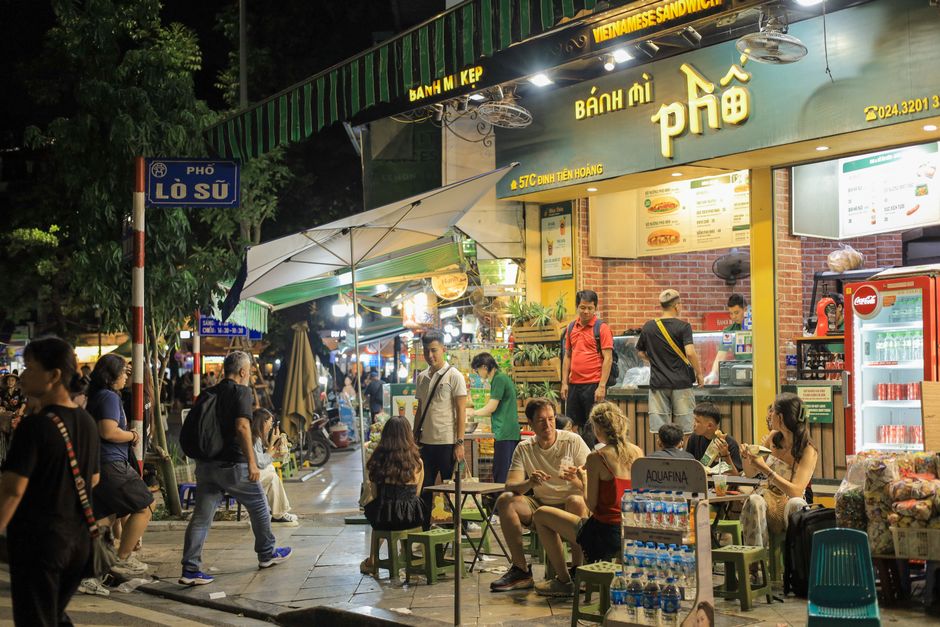
I paid 120,000 VND for a bowl of pho at a well-reviewed restaurant near Hoan Kiem Lake. It was fine. The next morning, I paid 50,000 VND at a plastic stool place two blocks away with a line of office workers. It was better. The difference? The expensive place had air conditioning and a TripAdvisor sticker on the door.
Rule: if the restaurant has a TripAdvisor or Google review sticker visible from the street, keep walking. The best food in Vietnam is served on low plastic stools with a view of a motorbike parking lot.
The $15/Day Food Budget That Works
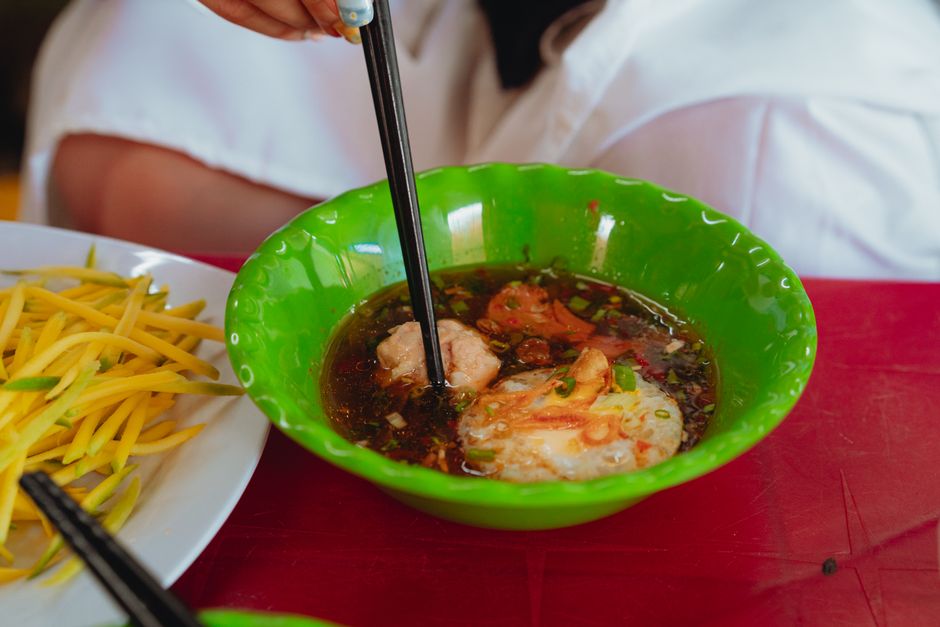
Here’s exactly what I spent on an average day in Hanoi, eating like a local who enjoys food rather than a backpacker surviving on instant noodles:
- Breakfast: Pho bo at a street stall — 50,000 VND ($2.00)
- Mid-morning: Ca phe sua da at a sidewalk coffee cart — 30,000 VND ($1.20)
- Lunch: Banh mi thit from a cart — 35,000 VND ($1.40)
- Afternoon snack: Fresh spring rolls or a small bowl of bun rieu — 30,000 VND ($1.20)
- Dinner: Bun cha or com tam at a family-run stall — 60,000 VND ($2.40)
- Evening drink: Bia hoi (fresh draft beer) — 15,000 VND ($0.60)
Total: 220,000 VND, roughly $8.80. That’s a full day of excellent food for less than a single fast-food combo meal in the United States.
If you want a fancier dinner with a view or a craft beer bar, budget $20–$25 for that day. But know that the fancy dinner is a choice, not a necessity. The street food is the main event.
Three Mistakes That Drain Your Food Budget
I made all of these mistakes in my first week. Don’t be me.
Mistake 1: Ordering Without Looking at the Local Price List
Many stalls have two prices: one for Vietnamese speakers and one for everyone else. This isn’t a scam — it’s just the reality of tourist economies everywhere. The fix: learn to read the numbers in Vietnamese or point at what a local is eating and say “same.” If you can say “bao nhieu?” (how much?) and look confused at the answer, you’ll often get the local price.
Mistake 2: Eating Three Restaurant Meals a Day
Restaurants in Vietnam are for special occasions. The street food is fresher because the turnover is higher. A stall selling 300 bowls of pho before 10 AM has ingredients that are hours old. A restaurant selling 20 bowls a day has ingredients that are days old. You’re paying more for worse food.
Mistake 3: Ignoring the Regional Differences
Hanoi pho is different from Saigon pho. Northern pho has a clearer, more savory broth with fewer herbs. Southern pho is sweeter and comes with a mountain of basil, bean sprouts, and lime. Neither is “better” — but if you only eat pho in one city, you’re missing half the story. Eat pho in both Hanoi and Saigon before you form an opinion.
The Dishes That Beat Pho
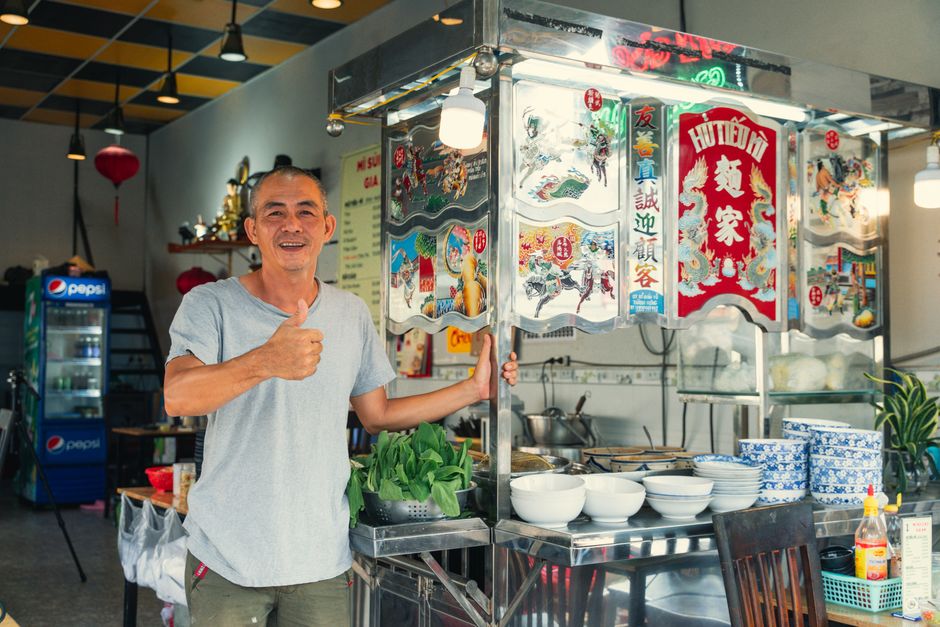
Pho is famous because it’s exportable. It’s the dish Vietnamese immigrants brought to America, Australia, and France. But in Vietnam itself, pho is just one player in a crowded field.
Here’s my honest ranking of what I ate, based on a month of daily street food:
- Bun cha (Hanoi): Grilled pork belly and pork patties in a sweet-savory broth with cold rice noodles. The dish Obama ate with Anthony Bourdain. It’s better than pho. I said it.
- Mi quang (Da Nang): Turmeric noodles with shrimp, pork, quail eggs, and a tiny amount of broth. The most underrated dish in Vietnam.
- Com tam (Saigon): Broken rice with a grilled pork chop, shredded pork skin, and a fried egg. The best hangover food in Southeast Asia.
- Banh xeo: Crispy turmeric crepe stuffed with shrimp, pork, and bean sprouts. Wrap it in rice paper with herbs and dip it in fish sauce.
- Pho bo: Yes, it’s good. No, it’s not the best thing in Vietnam. It’s just the most famous.
If you have one day in Hanoi, eat bun cha for lunch and pho for breakfast. If you have to choose one, choose bun cha.
The Coffee Question Nobody Asks
Vietnamese coffee is not like the coffee you drink at home. It’s robusta, not arabica. It’s darker, more bitter, and has twice the caffeine. It’s served with sweetened condensed milk because the bitterness would knock you over without it.
A ca phe sua da at a street cart costs 25,000–35,000 VND ($1.00–$1.40). At a specialty cafe like The Workshop in Saigon or Tranquil Books & Coffee in Hanoi, you’ll pay 60,000–90,000 VND ($2.40–$3.60) for a pour-over made with local arabica beans. Both are worth trying.
The mistake tourists make is ordering a cappuccino at a Western-style cafe and complaining that Vietnamese coffee is “too strong.” You’re not drinking Vietnamese coffee. You’re drinking an Italian drink made with Vietnamese beans. Order ca phe sua da or ca phe den da (black iced coffee) and drink it slowly.
One warning: Vietnamese coffee will ruin your sleep if you drink it after 3 PM. The caffeine content is genuinely higher than what most Westerners are used to. I learned this the hard way at 2 AM in a Hanoi hostel, staring at the ceiling.
The Verdict: Is the Pho Really That Good?
Here’s my honest answer after a month of eating pho almost daily: yes, pho is that good — but only when you eat it in the right place, at the right time, in the right city.
The pho you get at a street stall in Hanoi at 7 AM, surrounded by Vietnamese workers starting their day, is a genuinely transcendent food experience. The broth is clear and complex, the beef is sliced thin enough to cook in the hot liquid, and the herbs are fresh from that morning’s market.
The pho you get at a tourist restaurant at 7 PM is fine. It’s not the same thing.
If you’re planning a Vietnam trip in 2026, here’s my specific recommendation: budget $10–$15 per day for food, eat breakfast and lunch at street stalls, save your restaurant meals for dinner, and try bun cha before you leave Hanoi. You’ll eat better than you have in years and spend less than you would on a single meal in most Western cities.
The pho is worth the trip. But it’s not the only reason to go.