
Landscape photography represents the intersection of environmental patience and optical precision. While technical proficiency with a camera body is a baseline requirement, the philosophical approach to a scene often dictates the quality of the final output. Professional photographers frequently reference historical insights to refine their vision. These quotes serve as more than mere inspiration; they function as compressed wisdom regarding light, timing, and the physics of optics. Analyzing these perspectives allows a photographer to transition from passive recording to active creation.
The Technical Foundations Behind Famous Landscape Photography Philosophy
Ansel Adams famously stated, “You don’t take a photograph, you make it.” This perspective shifted the medium from a purely documentarian role to an interpretive art form. In modern technical terms, “making” a photograph involves managing the dynamic range of a scene. When the human eye views a high-contrast sunset, the brain processes details in both the shadows and the highlights. Digital sensors, however, have limitations. To adhere to Adams’ philosophy, a photographer must utilize techniques such as exposure bracketing or Neutral Density (ND) filters to compress that dynamic range into a usable file.
The concept of the “zone system,” pioneered by Adams, remains relevant in the digital era through the use of the histogram. By ensuring that the data peaks do not clip at either end of the graph, the photographer preserves the RAW data necessary for post-processing. This technical rigor is the modern equivalent of Adams’ darkroom work. Professional-grade cameras, such as those available through major retail outlets like Currys or John Lewis, now offer real-time histogram overlays in the electronic viewfinder. This allows for immediate adjustments to shutter speed or ISO, ensuring the “making” of the image begins before the shutter is even pressed.
Furthermore, the quote “Twelve significant photographs in any one year is a good crop” emphasizes the necessity of selectivity. In an age of high-speed continuous shooting, the discipline to wait for the exact moment when the light interacts with the topography is what separates professional work from amateur snapshots. This requires a deep understanding of weather patterns and the movement of the sun. Tools like PhotoPills or The Photographer’s Ephemeris are indispensable for calculating these variables. The investment in time often outweighs the investment in gear, though having reliable equipment ensures that when that rare moment occurs, the hardware does not fail.
Translating Abstract Artistic Quotes into Actionable Compositional Frameworks
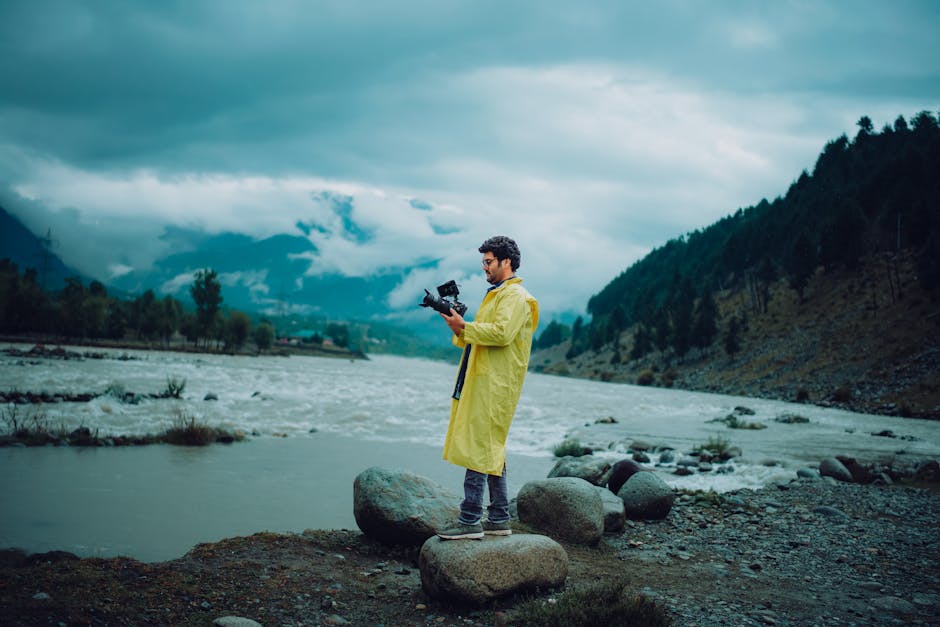
Galen Rowell, a pioneer of modern wilderness photography, noted that “Landscape photography is the supreme test of the photographer—and often the supreme disappointment.” This disappointment usually stems from a failure to translate a three-dimensional experience into a two-dimensional frame. To combat this, one must look to the quote by Minor White: “Be still with yourself until the object of your attention affirms your presence.” In practical terms, this translates to the practice of “pre-visualization.” Before setting up a tripod, a photographer should walk the perimeter of a location to identify leading lines and foreground interest that provide a sense of scale.
Compositional frameworks like the Golden Ratio or the Rule of Thirds are not just suggestions; they are rooted in the psychology of human perception. Robert Capa’s advice, “If your pictures aren’t good enough, you’re not close enough,” applies to landscape photography through the use of wide-angle lenses. By positioning the camera low to the ground and close to a foreground element—such as a weathered rock or a tide pool—the photographer creates a sense of depth that draws the viewer into the frame. This technique requires a lens with minimal edge distortion and a high degree of sharpness across the focal plane.
Technical execution of these quotes often involves the following steps:
- Identify the Primary Subject: Determine what the “object of attention” is in the vast landscape.
- Select a Focal Point: Use a small aperture (f/11 to f/16) to maximize the depth of field, ensuring both foreground and background are in focus.
- Stabilize the Frame: Utilize a high-quality carbon fiber tripod to eliminate micro-vibrations, especially during long exposures.
- Monitor the Light: Wait for the “Golden Hour” or “Blue Hour” when the sun is low, creating long shadows and soft textures.
Adhering to these steps ensures that the artistic intent remains grounded in technical excellence. Without the stability of a tripod or the clarity of a high-end prime lens, the philosophical goal of the image is lost to technical blur or poor exposure.
Essential Hardware for Executing Professional-Grade Landscape Imagery
To realize the vision described by the masters, the hardware must be capable of resolving immense detail and handling adverse environmental conditions. For those looking to upgrade, retail platforms often provide financing options through major providers to help manage the cost of professional systems. The current market is dominated by full-frame mirrorless systems that offer high megapixel counts and robust weather sealing.
High-Resolution Mirrorless Systems
The Sony A7R V is a leading choice for landscape professionals. Priced at approximately £3,900, it features a 61-megapixel sensor that allows for significant cropping while maintaining print-quality resolution. The primary advantage is its advanced AI-based autofocus and 8-stop in-body image stabilization. However, the complex menu system can be a deterrent for those used to more intuitive interfaces.
Alternatively, the Canon EOS R5, retailing for around £3,300, offers a 45-megapixel sensor and exceptional color science. Its ergonomics are widely considered superior to Sony’s, though it has faced criticism for overheating during high-resolution video recording. For a pure landscape photographer, this is rarely an issue. For those who prefer the Nikon ecosystem, the Nikon Z7 II (approx. £2,500) provides a base ISO of 64, which is ideal for long exposures and maximizing dynamic range in bright conditions.
Expert Tip: When purchasing high-end bodies, consider the total cost of ownership, including specialized lenses and high-speed CFexpress Type B cards, which are necessary to handle the large file sizes generated by these sensors.
Lenses are equally critical. A standard “trinity” for landscape photography includes a 16-35mm wide-angle, a 24-70mm standard zoom, and a 70-200mm telephoto. Telephoto lenses are often overlooked in landscape work, yet they are essential for compressing the scene and highlighting patterns in distant mountain ranges or forests. Investing in quality glass is often more beneficial than frequent camera body upgrades, as optics retain their value longer and have a more significant impact on the final image’s character.
Integrating Connectivity and Data Management into Remote Photography Expeditions
Modern landscape photography does not end when the shutter clicks. As Henri Cartier-Bresson suggested, the “decisive moment” is fleeting, but the management of that moment requires a robust digital infrastructure. For travel photographers working in remote regions of the Americas or Asia, staying connected is vital for both safety and workflow. Utilizing a high-speed mobile data plan from providers like EE or O2 (available through various telecom retail partners) allows for the immediate backup of low-resolution proxies to the cloud. This ensures that even if equipment is damaged or stolen during a trek, the creative work is preserved.
Data management in the field involves a multi-tiered approach:
- Primary Storage: High-capacity SD or CFexpress cards within the camera.
- Secondary Backup: Rugged external SSDs, such as the SanDisk Extreme Pro, which offer water and dust resistance.
- Cloud Integration: Using a mobile hotspot to sync key images to Adobe Creative Cloud or Google Drive while still in the field.
The ability to research weather changes in real-time via satellite-linked mobile apps can be the difference between a successful shoot and a wasted journey. Financial planning for these trips should include comprehensive equipment insurance. Many specialized providers offer policies that cover accidental damage, theft, and even the cost of re-shooting if a data failure occurs. This level of preparation reflects the professional’s commitment to the craft, acknowledging that the environment is unpredictable and the equipment is an investment that requires protection.
Data-Driven Comparison of Full-Frame Systems for Outdoor Photography

Selecting a system requires an objective look at the specifications that impact landscape work most: resolution, dynamic range, and weight. The following table compares three top-tier models currently favored by travel and landscape professionals. Prices are approximate and subject to regional retail variations.
| Model | Resolution | Base ISO | Weight (Body Only) | Approx. Price |
|---|---|---|---|---|
| Sony A7R V | 61.0 MP | 100 | 723g | £3,900 |
| Canon EOS R5 | 45.0 MP | 100 | 738g | £3,300 |
| Nikon Z7 II | 45.7 MP | 64 | 705g | £2,500 |
| Fujifilm GFX 100S II | 102.0 MP | 80 | 883g | £4,900 |
While the Fujifilm GFX 100S II offers a medium format sensor with unparalleled detail, its weight and the cost of its lens ecosystem make it a specialized choice for those who prioritize large-scale printing. For most travel-based landscape photographers, the full-frame mirrorless options from Sony, Canon, or Nikon provide the optimal balance of portability and performance. The Nikon Z7 II remains a high-value proposition for those specifically seeking the cleanest possible shadows at ISO 64.
Ultimately, the quotes that inspire the photography community serve as a reminder that the gear is a tool for a larger vision. Whether using a high-end mirrorless system or a sophisticated smartphone, the principles of light, composition, and patience remain constant. By combining the philosophical insights of the past with the technological advancements of the present, photographers can produce work that transcends simple travel documentation and enters the realm of fine art. Success in this field requires a continuous cycle of learning, where every quote analyzed and every piece of gear mastered contributes to a more refined visual voice.