
Airport parking is a handover between several systems: your route, a booking platform, the car park, the terminal and the return flight. The proof pack keeps the information that connects them in one place, ready even when roaming, battery or memory fails.
Keep the reference, product name and exact site together
Start with the confirmation screen, not just the confirmation number. Save the operator name, airport, terminal, arrival date, booked entry time and the parking product. “Gatwick parking” is not specific enough when the route signs offer several car parks and drop-off zones.
Include the amount paid and the cancellation or amendment terms that apply to your booking. Prices and conditions can change after purchase; the useful record is the one attached to your transaction. If an add-on such as flexible cancellation appears, note whether it was actually selected.
Store the confirmation as a PDF or screenshot that opens offline. A starred email still depends on a connection and a functioning mail app. One local copy removes that dependency.

The last mile needs more detail than a postcode
Airport postcodes often cover a large estate. Save the final approach instructions supplied by the parking company, including the recommended junction, entrance name and any lane or barrier instructions. Put the car park’s own directions ahead of a generic map pin.
Add the reception or arrival phone number and note when it should be called. Meet & Greet services may ask for a call a set number of minutes before arrival, while Park & Ride sites may direct you straight to reception. These are product-specific steps, so use the current booking instructions rather than an old routine.
Take one screenshot showing the route from the final major road to the entrance. It is far easier to glance at a saved turn sequence than to search an inbox while traffic is moving.
Four quick photos create a clean handover
Before leaving the vehicle, photograph each side in ordinary daylight if possible. Include the registration plate, wheels and any existing marks that could be confused later. These images are not an accusation; they are a simple timestamped record of condition.
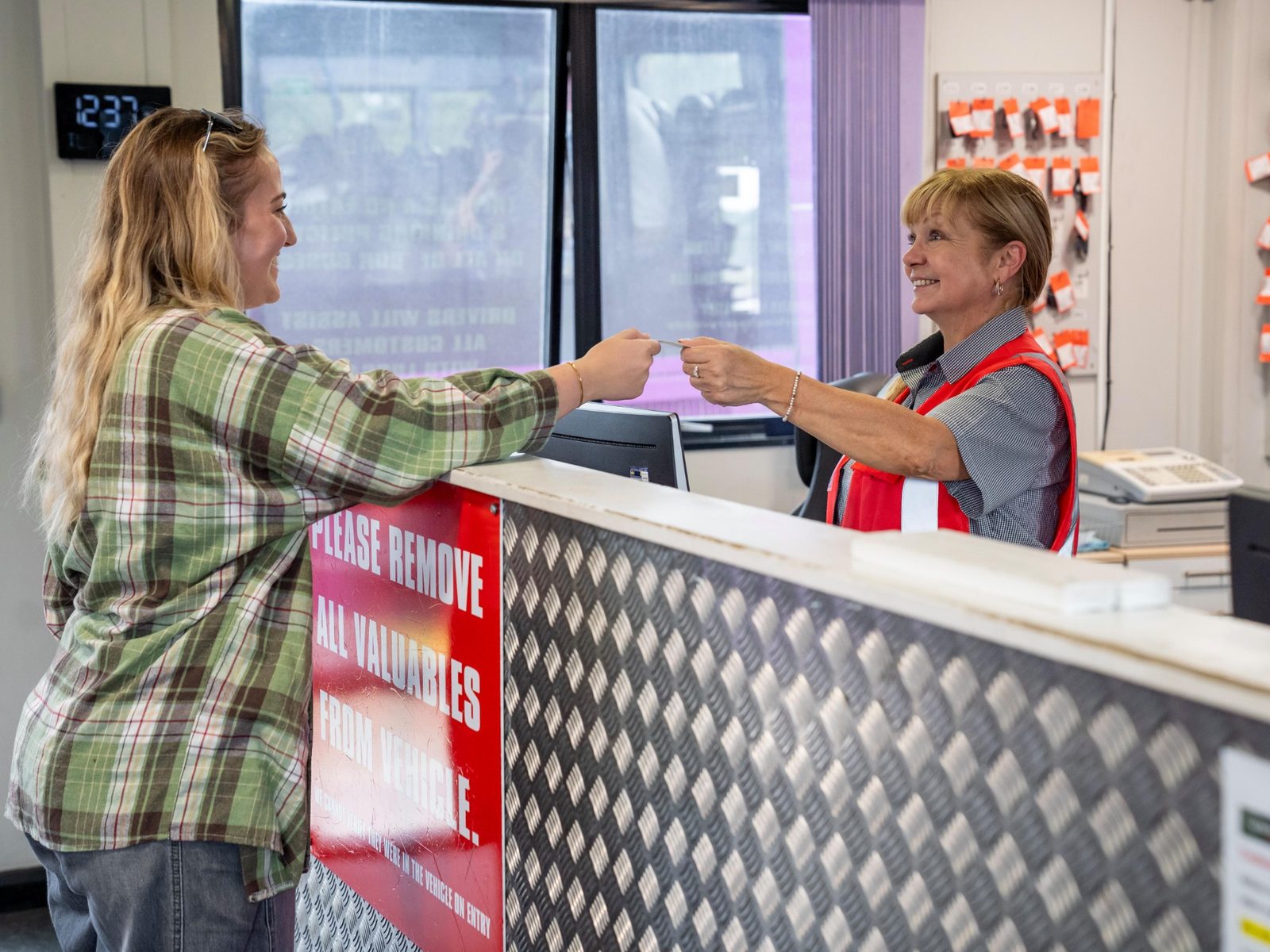
Photograph the mileage and fuel or charge level as well. Remove valuables, travel documents and house keys that do not need to stay with the vehicle. If the operator retains the car key, separate it from the rest of your keyring before reaching the desk.
For Meet & Greet, save a photo of the designated handover area only when it is safe and permitted. Confirm the driver or operator using the details in the official booking rather than responding to an unexpected message.
Write the instructions for your post-flight brain
Create one short note titled “Car home.” Include the collection process, phone number, opening hours, shuttle stop or meeting point, and the action that triggers collection. Some services ask you to call after baggage reclaim; others use a reception desk or an automated process.
Add the booking end time and the policy for delays. Do not guess whether a late flight automatically extends the reservation. The official confirmation should explain how additional time is handled and whom to contact.
Finally, share the return card with one travelling companion. The information should not depend on one phone remaining charged after a long flight.
Five minutes of evidence can remove an hour of uncertainty
The proof pack is deliberately small. It does not replace the operator’s instructions; it puts the right version of those instructions where a traveller can reach them quickly.