
You land at Fiumicino. You have a phone, a suitcase, and zero Italian beyond grazie. The train ticket machines look like they were designed by someone who hates tourists. This is the moment most people panic and spend €60 on a taxi they didn’t budget for.
You don’t need to. Rome’s transport system is flawed, often late, and occasionally strikes without warning. But it is also cheap, dense, and learnable in about 20 minutes. This guide covers the exact tickets, the validation rules that catch solo travelers off guard, and the routes that actually matter.
The Ticket System: What You Actually Pay in 2026
ATAC runs Rome’s metro, buses, trams, and urban trains. One ticket works across all of them. Here’s the breakdown that matters:
| Ticket Type | Price (2026) | Validity | Best For |
|---|---|---|---|
| BIT (single) | €1.50 | 100 minutes, one metro ride + buses/trams | Quick trips |
| Roma 24H | €7.00 | 24 hours unlimited | One full sightseeing day |
| Roma 48H | €12.50 | 48 hours unlimited | Weekend solo trip |
| Roma 72H | €18.00 | 72 hours unlimited | 3-day stay |
| CIS (weekly) | €24.00 | 7 days unlimited | Stays over 4 days |
Here’s the thing no one tells you: the 100-minute BIT ticket only allows one metro ride. You can switch between buses and trams as much as you want within those 100 minutes, but once you exit a metro turnstile, your metro access is done. Trying to re-enter the metro on the same BIT ticket is how solo travelers get fined €50 on the spot.
Buy tickets at any metro station machine, tobacco shop (tabacchi, look for the blue T sign), or newsstand. The machines take cards and cash. The tobacco shops sometimes only take cash under €5. If you’re landing at Fiumicino, the Leonardo Express to Termini is a separate €14 ticket — not covered by any ATAC pass.
Where Most First-Timers Mess Up
You buy a ticket. You get on the bus. You think you’re done. You are not done. You must validate the ticket by inserting it into the small yellow machine on the bus or at the metro turnstile. An unvalidated ticket is a €54 fine. Ticket inspectors board buses randomly, especially on routes 64 and 40 near the Vatican. No one cares that you didn’t know. The fine stands.
For the metro, the turnstile itself validates the ticket. For buses and trams, you need to stamp it yourself. The machine prints a timestamp. That timestamp is your proof. Keep the ticket until you exit your final vehicle.
Metro Lines: The Only Two That Matter for Tourists
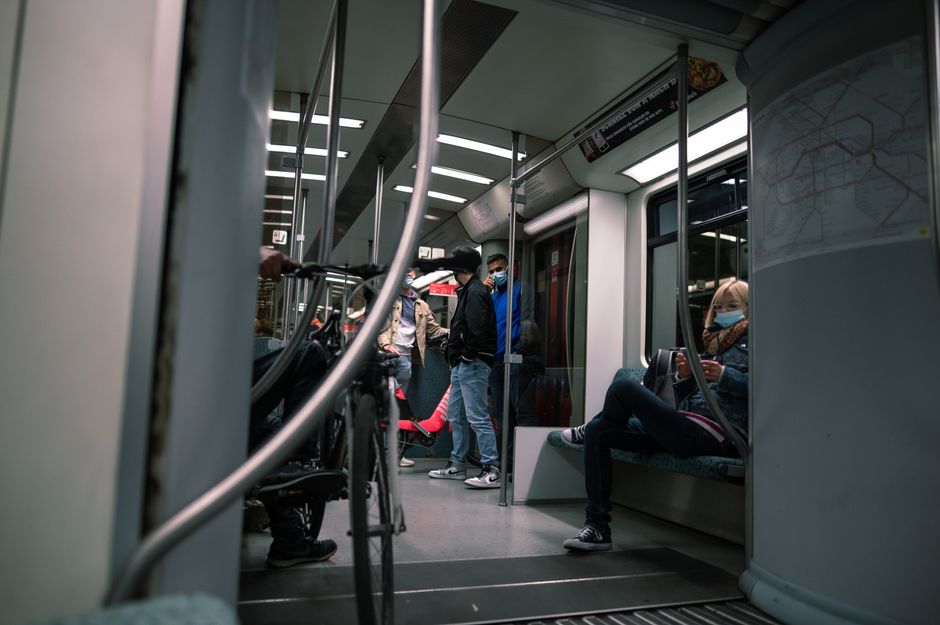
Rome has three metro lines: A (orange), B (blue), and C (green). Line C is useless for almost everything tourist-related. Ignore it.
Line A runs from Battistini to Anagnina. The stops you need: Ottaviano (Vatican Museums), Spagna (Spanish Steps), Barberini (Trevi Fountain), and Termini (central hub). Line B runs from Rebibbia/Jonio to Laurentina. The stops you need: Colosseo (Colosseum), Circo Massimo, and Termini again. The two lines intersect only at Termini.
Metro trains run roughly every 3-5 minutes during peak hours, 7-10 minutes off-peak. Last train is around 11:30 PM on weekdays, 1:30 AM on Saturdays. After that, you’re on night buses or walking. The metro is the most reliable part of Rome’s transport. Buses are not.
The Termini Transfer Reality
Termini is Rome’s main station and the only metro interchange. It’s also chaotic, crowded, and a hotspot for pickpockets. The transfer from Line A to Line B requires walking through a long underground corridor. Budget 7-10 minutes for the transfer. When you exit the metro at Termini, you’re inside the main train station. Follow the signs carefully — the station has multiple levels and the signage assumes you know where you’re going.
If you’re arriving from Fiumicino on the Leonardo Express, you’ll exit at track 24. The metro entrance is to your left as you face the main concourse. Buy your metro ticket before descending. The machines at the metro entrance often have shorter lines than the ones upstairs.
Buses and Trams: The Unpredictable Layer
Rome’s buses are where schedules go to die. A bus that should come every 8 minutes might not show for 25, then three arrive at once. This is normal. Do not plan tight connections around buses. Do not trust Google Maps’ bus arrival times. They are estimates based on a schedule that ATAC treats as aspirational.
That said, buses go where the metro doesn’t. Trastevere, the Appian Way, and parts of the historic center are bus-only territory. The tram system is smaller but more reliable. Tram 8 runs from Trastevere to Largo di Torre Argentina and is one of the most useful routes for solo travelers staying in Trastevere.
For bus stops, look for the yellow poles or electronic displays at larger stops. The displays show real-time arrivals, but accuracy varies. The Moovit app is more reliable than Google Maps for Rome buses. Download it before you leave. It works offline with the Rome map downloaded.
The Night Bus Reality
After midnight, regular buses stop. Night buses (marked with an N) take over. They run roughly every 30 minutes and follow different routes than daytime buses. They’re safe but slow. If you’re out late as a solo traveler, a taxi or a walk through well-lit areas is usually faster. Night buses from Termini fan out to most neighborhoods. The N1 roughly follows Line A’s route; the N2 roughly follows Line B.
Here’s my honest take: if you’re alone and it’s past midnight, skip the night bus. Pay the €10-15 for a taxi or use a ride-hailing app. The time saved and the safety margin are worth it. This is not a place to be cheap.
Validation, Fines, and the Inspector Problem

I already mentioned validation. It matters enough to repeat with more detail. On buses, the yellow validation machines are usually near the front and rear doors. Some are broken. If the machine is broken, write the date and time on the ticket with a pen. This is technically not official, but inspectors generally accept it if you make a genuine effort.
Inspectors work in plain clothes. They board at random stops, often in pairs. They’ll ask for your ticket. If it’s unvalidated, they issue a fine on the spot. The fine is €54 if paid immediately, more if paid later. They can legally ask for ID. If you don’t have ID, they can call the police. Don’t argue. Pay the fine or accept the ticket. Arguing makes it worse.
The routes with the highest inspection rates are the ones tourists use most: bus 64 (Termini to Vatican), bus 40 (express version), and the metro. Assume you will be checked at least once on a 3-day trip.
From Fiumicino to the Center: The First Decision
You have four options from Fiumicino airport. The Leonardo Express costs €14 and takes 32 minutes to Termini. It runs every 15 minutes. This is the fastest and most predictable option. The regional FL1 train costs €8 but goes to Tiburtina and Ostiense, not Termini. It’s slower and leaves you needing a transfer. The airport buses (Terravision, SIT, TAM) cost €6-7 and take 50-70 minutes depending on traffic. They drop you at Termini or the Vatican area. Taxis have a fixed rate of €48 to anywhere inside the Aurelian Walls.
My pick: the Leonardo Express. Yes, it’s €14. But it’s direct, it’s fast, and after a long flight, the last thing you want is a bus stuck in Roman traffic. Buy the ticket online before you fly or at the machines in the arrivals hall. The machines are easy to use and have an English option.
One warning: the Leonardo Express has its own ticket. Your ATAC pass does not cover it. Don’t board with a regular metro ticket. The conductor will fine you.
When to Walk Instead

Rome’s historic center is compact. The Colosseum, Forum, Trevi Fountain, Pantheon, and Piazza Navona are all within a 25-minute walk of each other. If you’re staying in the center, you may not need public transport at all on some days.
Walking also saves you the frustration of waiting for a bus that never comes. The only time public transport is clearly better is when you’re going to the Vatican from the Colosseum area (too far to walk comfortably), traveling to Trastevere from Termini, or heading out to the Appian Way. Otherwise, walk. You’ll see more, and you’ll avoid the validation stress entirely.
For solo travelers, walking also gives you better spatial awareness. You learn the city. You notice which streets feel safe and which feel sketchy. The metro teaches you nothing except how to read signs underground.
Bottom Line
- Buy a Roma 72H pass if you’re staying 3 days. It covers everything except the Leonardo Express and costs €18.
- Validate every ticket on buses and trams. The €54 fine is real.
- Use the metro for long distances, walk for short ones, and treat buses as a last resort.
- Download Moovit before you go. Google Maps is not reliable for Rome buses.
- After midnight, take a taxi. The night bus savings aren’t worth it alone.
Rome’s transport will frustrate you. It will also get you where you need to go for less than the price of a single cocktail. Learn the rules, validate your ticket, and you’ll be fine.