
Most people think hiring a guide as a solo traveler means surrendering your independence. Wrong. A good guide removes the annoying parts — logistics, language barriers, safety guesswork — and leaves you with the actual travel experience. The problem is most solo travelers pick the wrong type of guided experience and end up bored on a bus with 40 retirees.
Here’s the breakdown of what actually works, what wastes your money, and how to book without getting burned.
What Solo Travelers Actually Get Wrong About Guided Tours
The biggest mistake is assuming all guided travel is the same. It isn’t. A private guide in Kyoto costs $80–150 per day and follows your pace. A group tour with G Adventures or Intrepid Travel puts you with 12–16 strangers for 10 days. A free walking tour through GetYourGuide or Viator lasts 2 hours and costs whatever you tip. These serve completely different needs.
If you want social connection, book a small-group multi-day tour. If you want efficiency and local knowledge without the group dynamic, book a private guide for specific cities or activities. If you just want orientation on day one, do a free walking tour and move on.
Most solo travelers default to the cheapest option and then complain the tour felt generic. That’s not a tour problem. That’s a selection problem.
Group Tour vs Private Guide vs Day Tour: The Real Differences
| Type | Cost Range | Group Size | Best For | Worst For |
|---|---|---|---|---|
| Multi-day small group (G Adventures, Intrepid) | $1,200–$4,000 per trip | 10–16 people | Social solo travelers, first-time solo travelers, remote regions | People who hate fixed schedules or shared bathrooms |
| Private guide (day rate) | $80–$250 per day | 1–2 people | Custom pace, deep local knowledge, photography, food-focused travel | Budget travelers, people who want built-in socializing |
| Day tour or walking tour (GetYourGuide, Viator, Airbnb Experiences) | $15–$120 per person | 5–30 people | Quick orientation, specific activities (cooking, street food, hiking) | Deep cultural immersion, flexible pacing |
This table matters because most solo travelers book a day tour when they actually wanted a multi-day group, or vice versa. Figure out what problem you’re solving before you book anything.
The Solo Traveler’s Guide to Picking a Tour Operator That Won’t Disappoint

Here’s my blunt take: Intrepid Travel is the best multi-day operator for solo travelers right now. Their average group size is 10 people, they don’t charge a forced single supplement on most trips (they match you with a roommate or offer a cheap private room upgrade), and their itineraries lean toward local food and real neighborhoods rather than tourist traps. Their “Real Food Adventures” and “Basix” trips run $1,300–$2,800 for 8–12 days.
G Adventures is the close second. Similar model, slightly younger crowd, more party-oriented on their “18-to-Thirtysomethings” trips. If you’re over 35, pick Intrepid. Under 30 and want to drink with your group, pick G Adventures.
For private guides, GetYourGuide and Viator have the largest inventories, but quality varies wildly. Read the reviews for the specific guide, not the tour company. A guide with 400+ reviews and a 4.8 rating in Lisbon is a different product than a 3-star guide running the same tour title in Rome.
Red Flags That Scream “Skip This Tour”
- No maximum group size listed. That means 40+ people.
- Itinerary includes “shopping stops” at specific stores. You’re the product.
- Reviews only mention the guide’s personality, not what you actually saw or learned.
- No cancellation policy or a policy that requires you to email a person. That’s a trap.
- Photos look like stock images from 2016. The operator hasn’t updated anything in years.
One more thing: check if the operator offers a single supplement. Some multi-day tours charge $400–$800 extra just because you’re alone. Intrepid and G Adventures rarely do. Luxury operators like Trafalgar or Insight Vacations almost always do. If you see a single supplement over 30% of the tour price, book elsewhere.
When a Guide Makes Solo Travel Worse — Not Better
Some trips should stay self-guided. Full stop.
If you’re traveling to a major European city with excellent public transit (Tokyo, London, Paris, Berlin, Singapore), you don’t need a multi-day guided tour. You need a 2-hour walking tour on day one, then your own itinerary. A guide becomes a tether, not a tool.
Same goes for beach destinations. Nobody needs a guide to sit on a beach in Tulum or the Algarve. Book a day trip for the ruins or the cliffs, then go back to doing nothing.
Guides earn their cost in three situations: remote regions with poor infrastructure (Patagonia, the Sahara, rural Vietnam), places with real language barriers outside tourist zones (rural China, Uzbekistan, Ethiopia), and activities with genuine safety or skill requirements (high-altitude trekking, scuba diving, glacier hiking).
If your destination doesn’t hit one of those three boxes, save your money.
What a Good Guide Actually Costs in 2026
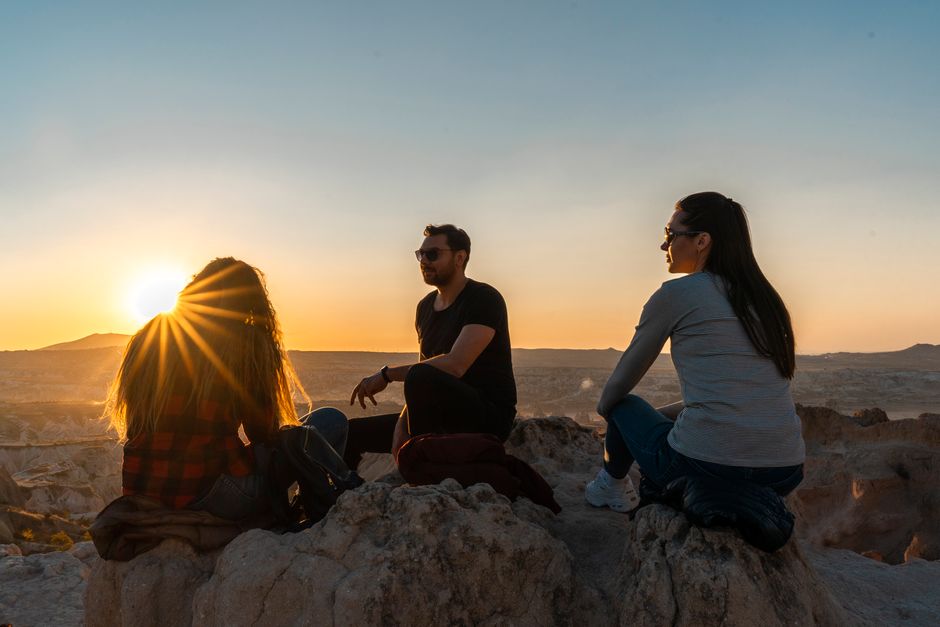
Here’s real pricing data from current listings, not vague estimates.
- Private guide in Southeast Asia (Bangkok, Hanoi, Siem Reap): $40–$80 per day. Book through GetYourGuide or hotel concierge. Expect a licensed guide with decent English.
- Private guide in Western Europe (Rome, Barcelona, Paris): $120–$250 per day. Higher end includes skip-the-line museum access.
- Private guide in Japan: $100–$180 per day. English-speaking licensed guides are scarce; book 3–4 weeks ahead.
- Multi-day small group tour (Intrepid, G Adventures): $1,300–$4,000 depending on region and duration. Southeast Asia trips run $1,300–$1,800 for 10 days. South America trips run $2,500–$4,000 for 14 days.
- Day tour (city walking, street food, cooking class): $15–$90 per person. Street food tours in Bangkok or Hanoi run $25–$40 and are worth every cent.
Budget rule: if a guide costs less than a nice dinner in that city, the quality will match the price. A $15 “full-day private tour” in Rome is a scam or a shopping trap. A $60 street food tour in Hanoi is fairly priced and usually excellent.
How to Book Without Getting Burned
Book through platforms with real buyer protection. GetYourGuide and Viator both offer free cancellation on most tours up to 24 hours before start time. Airbnb Experiences is decent for niche activities (pottery in Lisbon, graffiti tours in Bogotá) but their cancellation policies vary by host. Read the fine print.
For multi-day tours, book directly with Intrepid or G Adventures rather than through a third-party aggregator. Direct booking gets you better cancellation terms, loyalty discounts, and a real human if something goes wrong mid-trip.
And here’s the thing most articles won’t tell you: the tour operator’s emergency contact matters more than the itinerary. When your flight gets cancelled in Cusco or your passport gets stolen in Marrakech, you want a company with a 24-hour phone line and local staff. Intrepid and G Adventures have this. Random day-tour aggregators don’t.
Finally, stop treating guided travel as an all-or-nothing decision. The smartest solo travelers mix modes: self-guided in cities, a day tour for food or history, a multi-day group for remote regions. The guide is a tool. Use it when it solves a problem, skip it when it doesn’t.
Guided solo travel is only going to get more personalized. Private guides with niche expertise — food anthropologists, street art historians, birding specialists — are easier to find than ever through platforms like GetYourGuide and Viator. The future isn’t bigger tour groups. It’s smaller, sharper, and built around what you actually want to see.