
Is Rajasthan in February the right choice for a fort-and-desert trip? For most travellers, yes: the days are warm enough for long walks, the air is usually dry, and the Thar Desert is far more comfortable than it becomes later in spring. For travel planning, February works best when you treat the state as several different climates rather than one uniform destination.
Why is February one of the best times to visit Rajasthan?
What does the weather feel like?
February usually brings clear mornings, strong afternoon sun, and cool evenings. Jaipur and Jodhpur often feel comfortable in a light shirt from late morning through the afternoon, while Udaipur can feel slightly milder near the lakes. Jaisalmer and other desert towns warm quickly after sunrise, but the temperature can drop sharply after dark. A fleece or light jacket is useful for early departures, rooftop dinners, and overnight camps.
The word perfect needs a qualification. February is not reliably hot, and it is not rain-free in every possible year. Weather changes from season to season, and a cold front can make mornings surprisingly chilly. Still, the balance is unusually good for sightseeing. You can walk through Amber Fort, Mehrangarh Fort, or the City Palace complex without facing the extreme heat common from April onward.
What are the main trade-offs?
The same pleasant weather attracts more visitors. Palace hotels, desert camps, and popular trains can sell out around weekends and festival dates. Prices typically rise in Jaipur, Jodhpur, and Udaipur during the busiest parts of the month. Book rooms with heating if you are sensitive to cold, and do not assume a desert tent will feel warm at night. February is the best month for comfort, but comfort brings demand, queues, and higher rates.
How should you route Rajasthan in February?
Which cities fit a first trip?
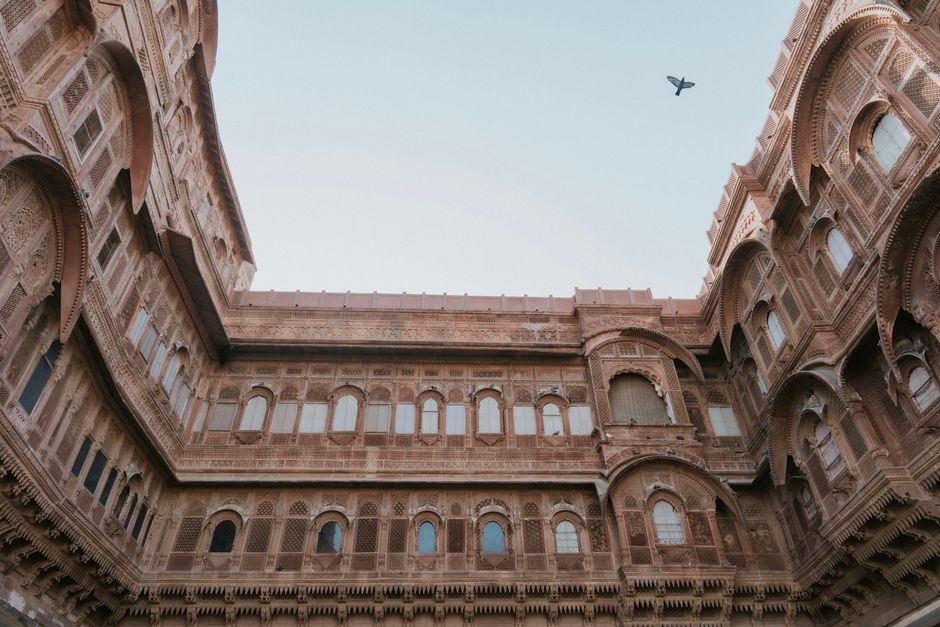
The strongest first-time route follows Jaipur, Jodhpur, Jaisalmer, and Udaipur. It combines a major fort, a blue-painted old city, a desert base, and lakeside palaces. Add Pushkar if you have one extra day. Skip it if the route already feels rushed; Rajasthan rewards slower mornings more than another checklist stop.
| Route leg | Typical travel time | Best reason to go | Planning note |
|---|---|---|---|
| Jaipur to Jodhpur | 5.5 to 6.5 hours by road | Move from royal capital to hilltop fort | Use a morning departure |
| Jodhpur to Jaisalmer | 4.5 to 5.5 hours by road | Reach the Thar Desert | Carry water and snacks |
| Jaisalmer to Udaipur | 9 to 11 hours by road | Connect desert and lakes | Fly or break the journey |
| Udaipur to Jaipur | 6.5 to 8 hours by road | Return to the main international hub | Train and flight options vary |
What is the clear route verdict?
For seven days, choose Jaipur, Jodhpur, and Jaisalmer. For ten or more days, add Udaipur. Do not force all four cities into five nights. The long Jaisalmer-to-Udaipur transfer can consume a full day and leave you seeing both places through a car window. The best February itinerary has fewer bases, longer walks, and one spare afternoon for delays.
What should you expect from Rajasthan weather in February?
How should you dress during the day?
Pack breathable layers rather than a single heavy outfit. Cotton or quick-dry shirts work for afternoon sightseeing, while loose trousers protect your legs from sun, dust, and uneven stone. A scarf helps on windy roads and can provide extra coverage at temples. Comfortable shoes matter more than fashionable shoes because forts involve steep ramps, rough paving, and long stairways.
Sun protection is practical, not decorative. A wide-brim hat, sunglasses, and SPF 30 or higher reduce the strain of walking exposed ramparts. The desert sun can feel intense even when the air temperature seems moderate. Drink before you feel thirsty, especially on fort days when shops may be scattered.
What changes after sunset?
Plan for a second outfit at night. Jaisalmer desert camps can feel cold after dinner, and early-morning camel or jeep excursions may begin before the sun has warmed the sand. A compact fleece is more useful than a bulky coat. The Osprey Farpoint 40 Travel Pack holds 40 litres and works well for layered travel; the Decathlon Forclaz Travel 500 40 L offers a lower-cost alternative. For day trips, a Nalgene Wide Mouth 32-ounce bottle gives you a durable one-litre water option. These are packing examples, not required purchases.
How do you plan a desert stay near Jaisalmer?
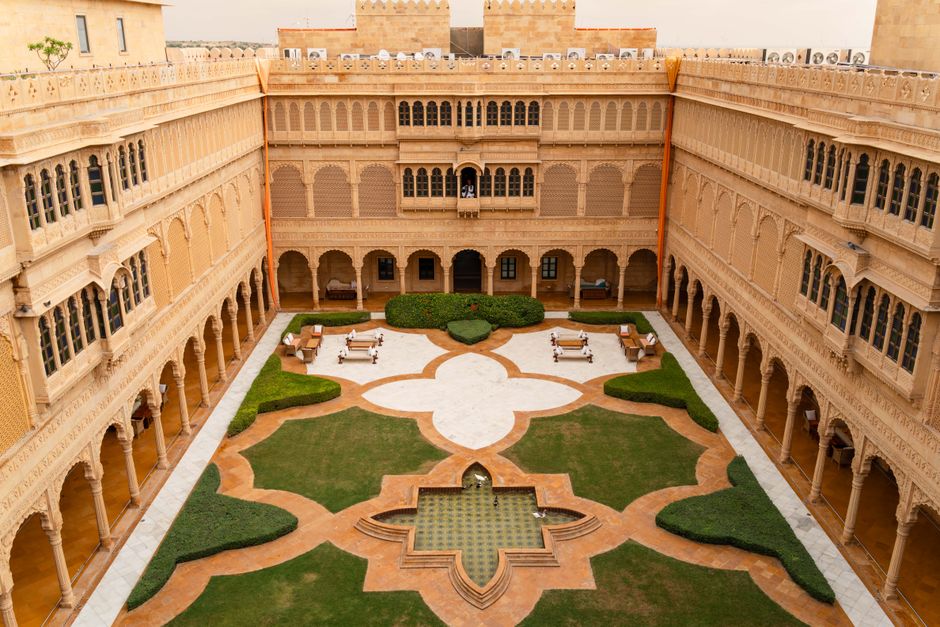
Choose a desert camp for the night sky and silence, not for luxury-room comfort. The desert experience works best when you know what the camp can and cannot provide. Many camps sit outside Sam or Khuri, and the transfer from Jaisalmer may take 45 minutes to an hour. Confirm the exact location, bathroom setup, heating, meal times, and return transport before paying.
Use this booking checklist
- Ask if the tent has a private bathroom, hot water, and an electric heater.
- Confirm the arrival time and the distance from Jaisalmer Fort.
- Check if the camel ride is optional and if a jeep transfer is available.
- Ask what the dinner menu includes and flag allergies in writing.
- Read recent reviews for noise, cleanliness, and transport reliability.
Which desert activity deserves priority?
Pick a sunset jeep ride if time is limited. It covers more ground than a camel ride and gives you a better chance of reaching a quiet dune area. Choose a camel ride for a slower, traditional experience, but expect discomfort and limited shade. A camp with folk music can be enjoyable, yet staged performances and loud generators are common complaints. For a quieter stay, Khuri often feels less concentrated than the busiest parts of Sam. The right choice is a clean camp with honest logistics, not the one promising the biggest entertainment schedule.
Which forts and palaces deserve your limited time?
Mehrangarh Fort is the strongest single fort visit in Rajasthan. Its scale, museum rooms, views over Jodhpur, and layered defensive design make it more rewarding than rushing through several smaller sites. Amber Fort is the best choice for architecture and royal courtyards, while Udaipur City Palace offers the most polished palace-and-lake setting.
How should you compare the major sites?
| Site | Best for | Time needed | Weak point |
|---|---|---|---|
| Amber Fort, Jaipur | Courtyards, gates, hill views | 3 to 4 hours | Large crowds at peak times |
| Mehrangarh Fort, Jodhpur | Fort scale and museum rooms | 3 hours | Steep walking in exposed sun |
| Jaisalmer Fort | Living fort and old-city lanes | 2 to 3 hours | Commercial pressure inside the fort |
| Udaipur City Palace | Palace interiors and lake views | 2 to 3 hours | Narrow galleries can feel crowded |
What is the practical visiting strategy?
Arrive at major forts near opening time, then reserve late afternoon for markets or viewpoints. Do not schedule Amber Fort, a full Jaipur market tour, and a sunset excursion on the same day. In Jodhpur, visit Mehrangarh before the afternoon light becomes harsh, then walk the blue lanes only if your energy remains. Palace visits reward patience: choose fewer rooms and read the labels instead of racing toward the exit. For a first trip, Mehrangarh wins for fort history, Amber wins for royal design, and Udaipur wins for atmosphere.
What mistakes make a February Rajasthan trip harder?
Should you rely on road distances alone?
No. A route that looks short on a map can take much longer because of traffic, village roads, stops, and road repairs. Build a buffer of at least two hours into long transfers. Keep your arrival day light. If you land in Delhi after a long international flight, adding an immediate road journey to Jaipur can turn the first day into a recovery day rather than a sightseeing day.
Which errors should you avoid?
- Do not pack only summer clothes; desert nights can be cold.
- Do not book a camp without confirming the bathroom and heating arrangements.
- Do not schedule a major fort at midday if you can visit early.
- Do not treat every palace hotel as a genuine heritage property; inspect recent reviews and room details.
- Do not depend on one payment method. Carry a small amount of Indian rupees for tips, snacks, and rural stops.
- Do not plan every meal and transfer so tightly that one delay ruins the day.
The clearest mistake is trying to prove you saw Rajasthan by collecting cities. The better measure is time spent outside the vehicle: one unhurried fort, one market walk, one quiet desert sunset, and one evening beside a lake will usually stay with you longer.